
Technology & Tools
At Trotter, we combine deep sales expertise with a powerful technology stack to help clients grow smarter and faster.
Our approach integrates CRM systems, AI tools, lead generation platforms, and enterprise infrastructure to deliver measurable results.


CRM & ATS Platforms
A Customer Relationship Management (CRM) platform focuses on managing interactions with customers, clients, or leads. It helps businesses track communications, organize contact data, monitor sales pipelines, and improve customer engagement and retention.
An Applicant Tracking System (ATS), on the other hand, is tailored for recruitment. It enables companies to manage job postings, collect and organize applications, screen candidates, schedule interviews, and track hiring progress efficiently.
When combined or integrated, CRM and ATS platforms provide a unified solution that supports both business growth and talent acquisition—allowing organizations to manage external relationships (customers) and internal growth (hiring) in a structured, data-driven way.






AI Tools & Prompt Engineering
AI tools are software platforms powered by machine learning and natural language processing that assist with tasks such as content creation, data analysis, automation, coding, and decision-making. Examples include chat-based assistants, image generators, and workflow automation systems that enhance productivity and efficiency across various industries.
Prompt engineering is the practice of designing and refining the instructions given to AI systems to guide their responses. It involves choosing the right wording, structure, and context to produce high-quality results—whether generating text, solving problems, or performing specific tasks.
Together, AI tools and prompt engineering enable users to maximize the potential of AI, turning simple inputs into powerful outputs while improving accuracy, consistency, and overall performance.





Lead Generation & Data Mining
Lead generation focuses on attracting and capturing interest from prospective clients or customers. This can be done through various channels such as websites, social media, email campaigns, and advertising, with the goal of building a pipeline of qualified prospects who are likely to convert into sales.
Data mining, on the other hand, involves analyzing large sets of data to uncover patterns, trends, and useful information. Businesses use data mining techniques to better understand customer behavior, segment audiences, predict outcomes, and optimize marketing strategies.
Together, lead generation and data mining enable organizations to target the right audience more effectively, personalize outreach, and make data-driven decisions that improve conversion rates and overall business performance.



Workflow & Marketing Automation
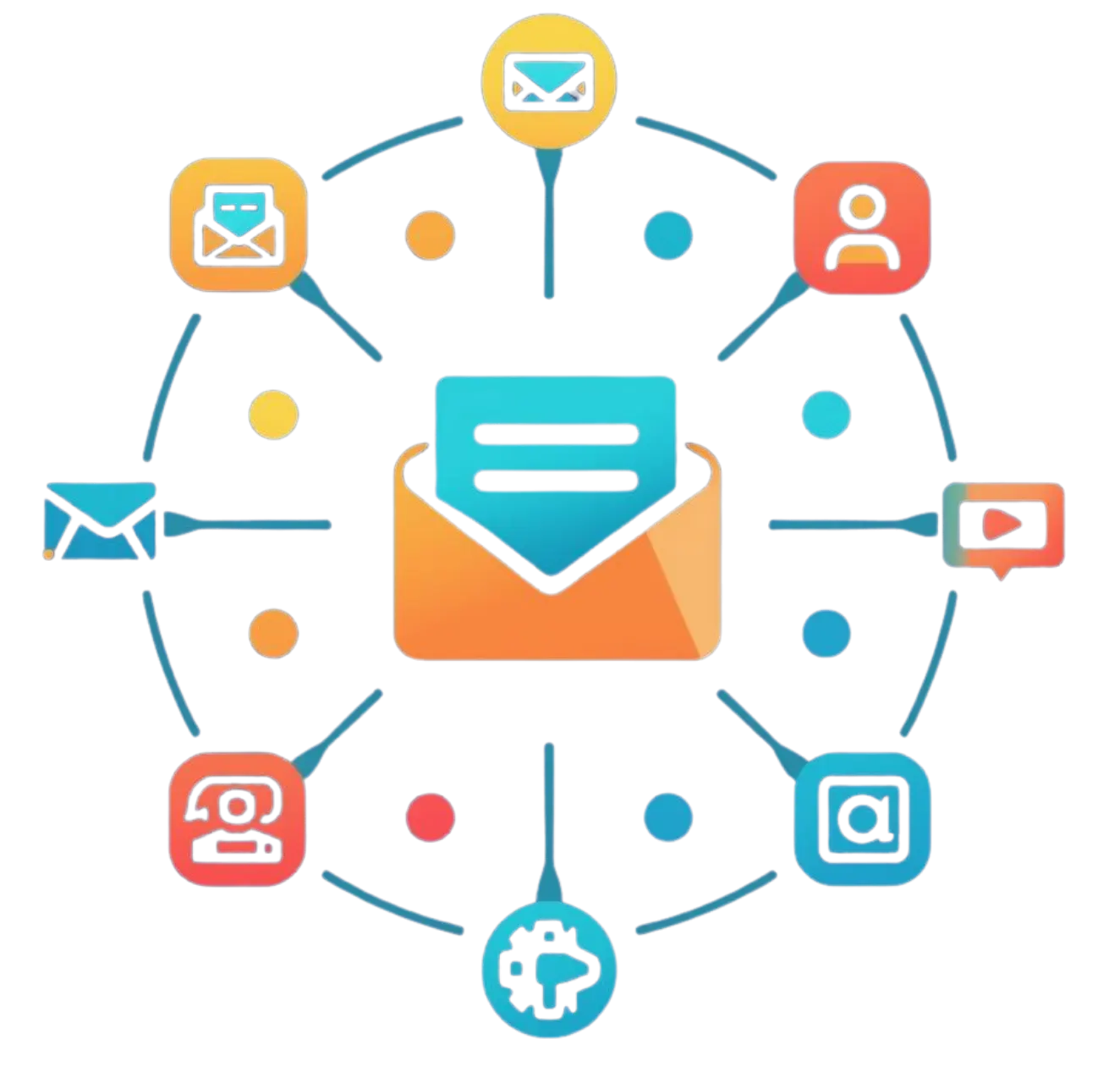
Workflow automation focuses on optimizing internal processes by automating repetitive tasks, approvals, and data transfers across systems. This helps reduce manual effort, minimize errors, and ensure consistent execution of business operations.
Marketing automation, on the other hand, involves using software to manage and automate marketing campaigns such as email sequences, lead nurturing, customer segmentation, and performance tracking. It allows businesses to deliver timely, personalized messages to the right audience based on behavior and predefined triggers.
Together, workflow and marketing automation empower organizations to increase productivity, improve customer engagement, and drive growth by combining operational efficiency with intelligent, data-driven marketing strategies.




Cloud & Infrastructure
Cloud computing enables businesses to access computing resources—such as servers, storage, databases, and software—over the internet instead of relying on physical, on-premise hardware. This provides flexibility, scalability, and cost efficiency, allowing organizations to quickly adapt to changing demands.
Infrastructure encompasses the foundational components that keep systems running, including servers, networks, data centers, and security frameworks. It ensures that applications and services are reliable, secure, and performant.
Together, cloud and infrastructure form the backbone of modern digital operations, enabling businesses to build, deploy, and scale applications efficiently while maintaining high availability and security.


ERP & Business Systems
Enterprise Resource Planning (ERP) systems centralize key functions such as finance, human resources, supply chain, inventory, and operations into a single unified platform. This enables real-time data visibility, improved coordination, and more informed decision-making across the organization.
Business systems include a broader range of tools and applications that support specific functions—such as accounting software, project management tools, customer databases, and reporting systems. These systems work alongside or integrate with ERP platforms to enhance overall efficiency and control.
Together, ERP and business systems allow companies to streamline operations, reduce manual work, and maintain accurate, consistent data across the entire organization, supporting scalable and sustainable growth.


Cybersecurity Concepts
These concepts include areas such as confidentiality, integrity, and availability (CIA triad), which ensure that information is kept secure, accurate, and accessible only to authorized users. Other key elements involve risk management, encryption, authentication, access control, and threat detection.
Cybersecurity concepts also cover common threats like malware, phishing, and ransomware, as well as the strategies used to prevent, detect, and respond to these risks.
Together, these principles provide a foundation for building secure systems and fostering safe digital environments, helping organizations protect sensitive information, maintain trust, and ensure business continuity.
Incident Response
Pen Testing
Red/Blue Teaming
Threat Monitoring
Putting Technology to Work for Sales
